 By Archie J Abraham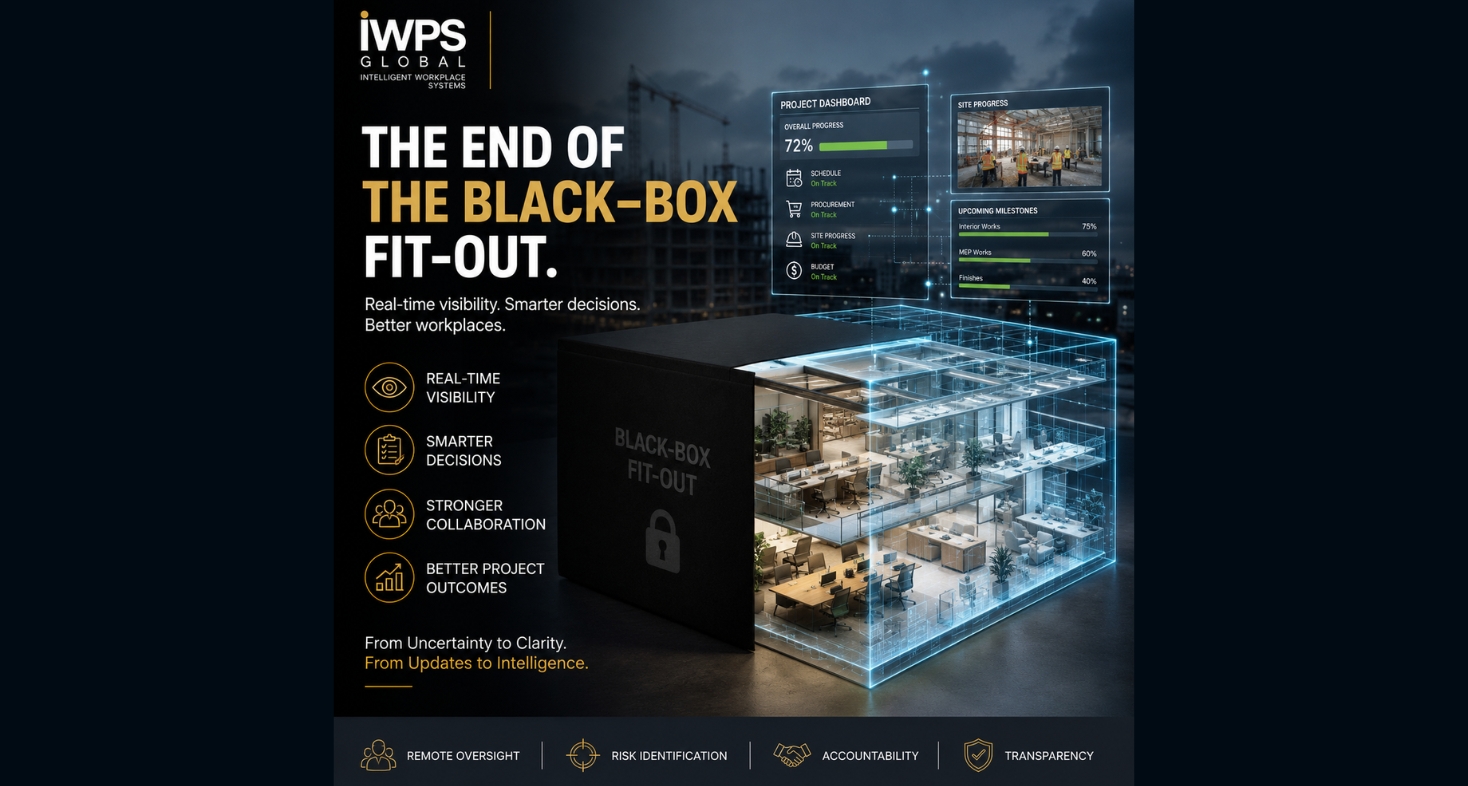
For decades, commercial office fit-outs have operated like a black box.
Once a project begins, clients often receive periodic updates, spreadsheets, photographs, and progress reports—but very little real-time visibility into what is actually happening on-site. While project milestones may appear to be on track, hidden delays, procurement bottlenecks, budget overruns, and communication gaps frequently remain unnoticed until they begin affecting delivery timelines.
In today’s rapidly evolving workplace landscape, this traditional approach is no longer sustainable.
Modern organizations expect the same level of transparency from workplace projects that they receive from finance, operations, and supply chain management. Corporate leaders want instant access to project health, procurement status, construction progress, and key risks—all in one place.
This shift is redefining how commercial interior design and workplace project management are delivered.
Why Traditional Fit-Out Management Creates Blind Spots
Large workplace transformation projects involve multiple stakeholders working simultaneously:
- Interior designers
- Architects
- MEP consultants
- Procurement teams
- Contractors
- Vendors
- Facility managers
- Client leadership
Every team generates information independently.
Without a centralized platform, project updates become scattered across emails, spreadsheets, messaging applications, and weekly meetings. Decision-makers are left trying to piece together fragmented information while critical issues continue to grow unnoticed.
The result is delayed decisions, increased project risks, and reduced stakeholder confidence.
Transparency is no longer a luxury—it has become a strategic requirement.
The Rise of Intelligent Workplace Project Management
Digital transformation has already reshaped industries such as banking, healthcare, manufacturing, and logistics. Commercial real estate and workplace design are now following the same path.
Today’s leading organizations are embracing intelligent workplace systems that connect planning, procurement, execution, and reporting into a single digital ecosystem.
Instead of reacting to issues after they occur, organizations can monitor project progress in real time, identify emerging risks early, and make informed decisions based on live data.
This approach enables workplace leaders to maintain complete visibility from concept through project handover.
Three Reasons Why Black-Box Fit-Outs No Longer Work
1. Limited Visibility Creates Unnecessary Risk
Executives responsible for workplace investments often oversee projects across multiple cities or countries. When project updates rely solely on manual reports, leadership lacks the confidence to make timely decisions.
Real-time dashboards, digital reporting, and centralized project tracking eliminate uncertainty by providing a single source of truth for every stakeholder.
2. Procurement Delays Affect Every Project
One delayed shipment can impact multiple downstream activities.
Long-lead items such as HVAC equipment, furniture, lighting systems, and imported materials frequently determine whether a project finishes on schedule.
Modern project management platforms continuously monitor procurement milestones, purchase orders, and delivery schedules, enabling teams to identify risks before they impact the construction timeline.
3. Remote Project Oversight Requires Digital Visibility
Many organizations manage projects across geographically distributed offices.
Traveling to every project site is neither practical nor efficient.
Geo-tagged progress reports, digital documentation, live dashboards, and centralized collaboration allow stakeholders to monitor project execution regardless of location.
Decision-makers gain confidence through data rather than assumptions.
From Project Updates to Project Intelligence
Traditional reporting answers one question:
“What happened?”
Intelligent workplace platforms answer much more:
- What is happening today?
- Which activities are behind schedule?
- Which vendors require attention?
- Where are procurement risks emerging?
- Which milestones are affecting project delivery?
- What decisions require immediate action?
This shift transforms reporting into operational intelligence.
Instead of collecting information, organizations begin using information to improve project outcomes.
Why Workplace Transparency Builds Better Workplace Experiences
A successful commercial office project is measured by more than design quality.
It depends on:
- Predictable delivery
- Budget control
- Procurement efficiency
- Stakeholder communication
- Risk management
- Occupant readiness
Organizations that prioritize transparency experience fewer surprises throughout the project lifecycle.
Every stakeholder operates from the same information, enabling faster approvals, stronger collaboration, and more confident decision-making.
Technology Is Reshaping Commercial Interior Projects
Emerging workplace technologies are enabling a new generation of project delivery.
These include:
- Digital project dashboards
- Cloud-based collaboration
- Geo-tagged progress tracking
- Automated reporting
- Procurement intelligence
- Building Information Modeling (BIM)
- Digital Twin integration
- AI-powered workplace analytics
Together, these technologies reduce manual effort while improving project accuracy, accountability, and operational efficiency.
The Future of Workplace Project Delivery
Commercial office projects are becoming increasingly complex.
Organizations are investing in flexible workplaces, hybrid work environments, smart buildings, sustainability initiatives, and employee-centric office experiences.
Managing these projects requires more than spreadsheets and status meetings.
The future belongs to intelligent project ecosystems that provide continuous visibility across planning, procurement, construction, and workplace operations.
Transparency is becoming one of the most valuable assets in workplace transformation.
Why IWPS Global Takes a Different Approach
At IWPS Global, we believe workplace projects should never operate as a black box.
Our intelligent workplace solutions combine project management, workplace strategy, operational intelligence, and digital technologies to give organizations complete visibility throughout the workplace lifecycle.
By integrating real-time reporting, procurement tracking, workplace analytics, and collaborative digital platforms, we help organizations deliver commercial office projects with greater confidence, efficiency, and accountability.
Because successful workplace transformation begins with complete transparency.
Conclusion for Workplace Transparency
The commercial real estate industry is entering a new era. iWPS Scheduler
Organizations no longer want periodic updates—they expect continuous visibility.
They no longer rely solely on experience—they expect actionable intelligence.
And they no longer accept uncertainty as part of project delivery.
The future of commercial office fit-outs belongs to organizations that embrace transparency, digital collaboration, and intelligent workplace management.
The black box is finally opening—and the organizations that adapt first will build workplaces that are not only delivered on time but also designed for long-term performance.
Ready to Transform Your Next Workplace Project?
Discover how IWPS Global helps organizations achieve greater transparency, smarter project management, and data-driven workplace delivery through intelligent workplace solutions.
FAQ
What is a commercial office fit-out?
A commercial office fit-out is the process of transforming an empty or existing office space into a fully functional workplace through interior design, construction, furniture, technology, and workplace planning.
Why is project transparency important during office fit-outs?
Project transparency helps stakeholders monitor timelines, procurement, budgets, and construction progress in real time, reducing delays and improving collaboration
How does digital project management improve workplace delivery?
Digital project management centralizes schedules, procurement tracking, reporting, and communication, giving organizations complete visibility throughout the project lifecycle.
What challenges do organizations face during office fit-outs?
Common challenges include delayed procurement, communication gaps, budget overruns, fragmented reporting, and limited visibility into construction progress.