
 By Archie J Abraham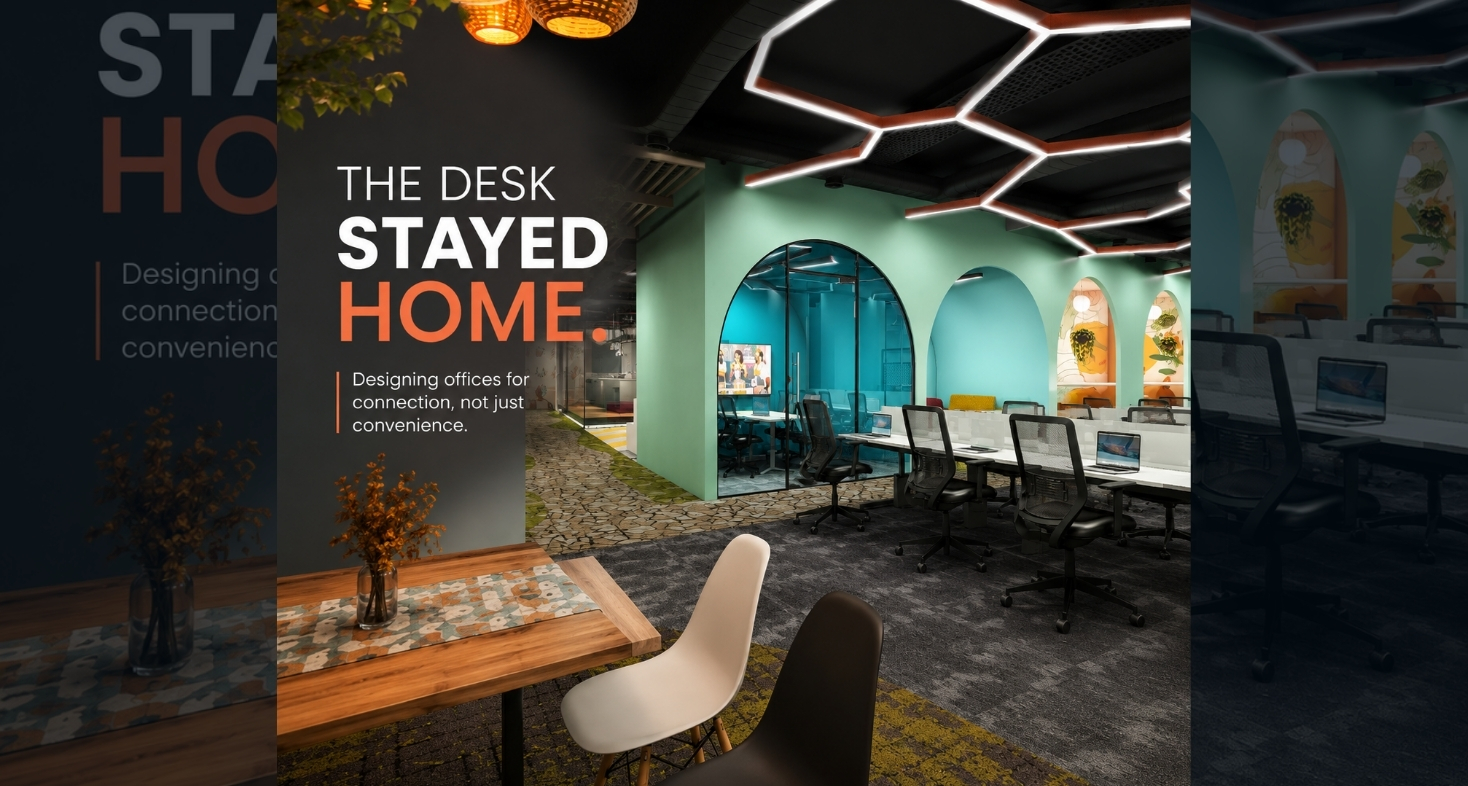
For decades, the office had one primary purpose: provide a desk for employees to work from.
Hybrid work has changed that.
Employees can now complete focused, individual work from home. So, why should they travel to the office?
The answer is increasingly simple: people.
Microsoft’s Work Trend Index found that 84% of employees are attracted to the office by socialising with colleagues, 85% by rebuilding team bonds, and 73% would come more often if their direct team were present.
The implication is clear: the modern office needs a new purpose.
The Shift From Desk-First to Collaboration-First
Traditional workplace planning focused heavily on desks.
More employees meant more workstations.
But hybrid work has changed how people use offices. Individual focus work can often happen remotely, while collaboration, mentoring, brainstorming, and relationship building benefit from being together.
This means companies should ask:
“How many desks do we need?” and start asking:
“What should our workplace enable?”
A modern workplace should provide the right environment for different types of work, including:
- Focused work
- Team collaboration
- Brainstorming
- Informal conversations
- Mentoring
- Social interaction
- Workshops
Three Ways to Rethink the Modern Workplace
1. Rethink the Desk
Not every employee needs a permanent desk if they are working from the office only part of the week.
Instead, organisations can balance workstations with collaboration areas, focus spaces, social zones, and flexible environments.
The goal is not simply to reduce desks. It is to make every square foot more purposeful.
2. Design for Different Types of Collaboration
Collaboration is not one activity.
A two-person conversation is different from a team huddle or a creative workshop. Yet many offices rely on the same standard meeting-room format for everything.
A collaboration-first workplace can include:
- Small conversation areas
- Team huddle spaces
- Flexible workshop zones
- Informal meeting areas
- Private rooms
- Technology-enabled collaboration spaces
The newsletter references Gensler’s research highlighting seven different modes of in-person collaboration, reinforcing the need for a variety of workplace settings.
3. Make Collaboration Measurable
A beautifully designed collaboration space does not automatically mean successful collaboration.
Organisations need to understand how their spaces are actually being used.
Workplace analytics can reveal:
- Which spaces are most popular
- Where teams naturally gather
- Which meeting rooms are overbooked
- Which areas remain underused
- When collaboration peaks
- How employees move between different zones
This turns workplace strategy from guesswork into evidence-based decision-making.
Open Space Does Not Automatically Create Collaboration
One common assumption is that removing walls will automatically increase interaction.
Research referenced in the newsletter challenges this idea. Ethan Bernstein and Stephen Turban found that face-to-face interaction dropped by roughly 70% after organisations moved into open-plan environments.
The lesson is important:
Visibility does not equal collaboration.
People need the right combination of openness, privacy, acoustics, and proximity to collaborate effectively.
Make the Commute Worth It
If employees travel to the office only to sit at a desk and attend virtual meetings, the workplace offers little that home cannot.
The office needs to provide experiences that are difficult to replicate remotely:
connection, collaboration, creativity, community, and shared experiences.
As the newsletter puts it, employees are unlikely to make the commute simply for a desk they already have at home.
That should become a central principle of hybrid workplace design.
The Future of Workplace Design
The future office will not be defined by how many desks it contains.
It will be defined by how effectively it brings people together.
High-performing workplaces will combine:
- Focus spaces
- Collaboration zones
- Informal social areas
- Private rooms
- Flexible workstations
- Technology-enabled meeting spaces
- Workplace analytics
The right mix will differ for every organisation. That is why workplace design should begin with how people actually work, not simply with a standard office template.
How iWPS Global Can Help
At iWPS Global, workplace strategy combines design, utilisation data, and intelligent workplace systems to help organisations create more purposeful workplaces.
The Workplace Performance Index (WPI) helps organisations evaluate workplace performance and identify opportunities to improve how their space supports people and business outcomes.
Is your office still designed around the desk?
Connect with iWPS Global to explore how workplace data can help you create a more collaboration-first workplace.
Visit: https://blogs.iwpsglobal.com/
Explore: https://wx1.ai/
Connect with us on LinkedIn
Frequently Asked Questions
What is hybrid workplace design?
Hybrid workplace design creates flexible environments that support both remote and in-office work while making the physical office valuable for collaboration and connection.
Does open-plan design improve collaboration?
Not necessarily. Open space alone does not guarantee interaction. Effective collaboration requires the right combination of spaces, privacy, acoustics, and proximity.
What should a modern hybrid workplace include?
A modern workplace can include focus areas, collaboration zones, informal spaces, private rooms, flexible workstations, and technology-enabled meeting areas.
How can workplace analytics improve office design?
Workplace analytics shows how employees actually use different spaces, helping organisations make better decisions about space planning, utilisation, and workplace experience.
[…] Related reading: The Desk Stayed Home: How Hybrid Work Is Redefining the Modern Office […]
[…] If employees can perform individual work from multiple locations, the office can increasingly focus on activities that benefit from physical presence. […]