
 By Archie J Abraham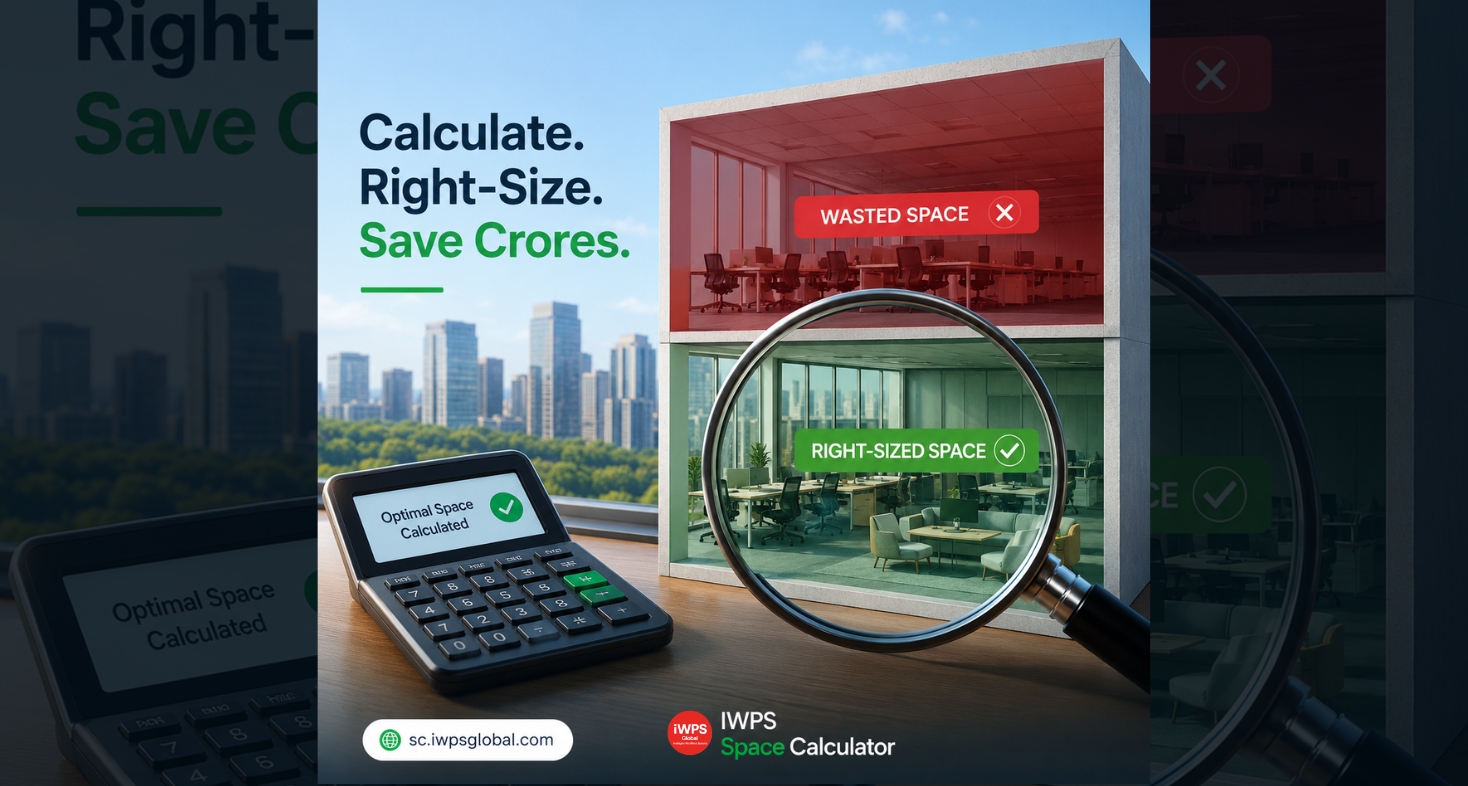
Office Lease Gurgaon decisions have become more important than ever as Gurgaon continues to be India’s most active Grade A GCC leasing market in 2026. The Cyber City and Golf Course Road corridor added over 8 million sq ft of occupied GCC space in the past two years. Premium office lease rates now range from ₹90 to ₹130 per sq ft per month. Therefore, the financial impact of choosing the wrong office space is no longer marginal—it can significantly affect business costs and long-term workplace performance.
The most consistent error in Gurgaon GCC lease planning is not the rate negotiation or the fit-out specification. It is the space calculation that produces the sq ft figure before the brief goes to the developer. Get that number right and the rest of the lease process follows more efficiently. Get it wrong and the lease becomes a financial liability that compounds silently across its full term.
This article sets out the five-step calculation that closes that gap — a methodology that any CRE or admin lead can run in fifteen minutes before the next lease brief is issued.
Why the Standard Approach Produces the Wrong Number
The headcount-per-desk formula — 8 to 10 sq m per person, applied to total headcount — was derived for a working environment that no longer exists in Gurgaon GCCs. The formula assumes that every employee will be present simultaneously on every working day. India’s GCC workforce in 2026 attends the office on average 3 to 4 days per week. The peak day — Tuesday — sees approximately 80% of headcount. The trough — Friday — sees approximately 42%. The weekly average sits at 60–66%.
A formula sized for simultaneous 100% occupancy, applied to a workforce that peaks at 80% and averages at 63%, produces a systematic over-estimate of 25 to 35%. For a 50,000 sq ft Gurgaon lease at ₹100 per sq ft, a 28% over-estimate means ₹14 lakhs per month in excess rent — ₹8.4 Crore over a five-year lease term. The formula is not wrong in principle. It is calibrated to a different working pattern.
Step 1: Measure Actual Attendance
The starting input for a correct space calculation is not the headcount figure from HR — it is the observed number of people in the building each day across a representative working period. For a Gurgaon GCC, four weeks of badge access data or desk booking records produces a reliable attendance baseline. The output should show: average daily presence, day-of-week distribution (Monday through Friday), and the range between peak and trough days.
Typical Gurgaon GCC attendance pattern in 2025–26: Tuesday at 79–84% of headcount, Wednesday at 75–80%, Thursday at 70–76%, Monday at 60–68%, Friday at 38–46%. The weekly average across all five days runs at 62–67% of total headcount. This is the actual demand profile the lease must serve.
Step 2: Size for the 85th Percentile
Once the attendance distribution is known, the space requirement should be sized for the 85th percentile attendance day — the level of occupancy the office experiences on 85% of all working days. This is not the peak day (which happens 2 to 3 times per month) and not the average (which would produce an occasional crunch on Tuesdays and Wednesdays).
For a typical Gurgaon GCC with the attendance pattern described above, the 85th percentile day is typically Wednesday at approximately 76 to 80% of headcount. Sizing the space for this level means the office is comfortably served on 85% of working days, slightly stretched on the peak Tuesday 3 to 4 times per month, and significantly under-utilised on Fridays. This is the appropriate trade-off between comfort and waste for a 5-year Gurgaon lease.
Step 3: Apply Hybrid-Adjusted Space Norms
The 85th percentile headcount is the input to the space calculation, not the total. The second variable is how much space each person requires — and this is where hybrid-adjusted norms produce a significantly different answer from the flat 8 to 10 sq m per person rule.
In a Gurgaon GCC in 2026, the in-office day is primarily used for collaboration (project meetings, team working sessions, client calls), focus work in a structured environment, and social interaction. It is not primarily a desk-based individual work day — that mode migrates to home or to flexible working locations. The space type allocation should reflect this shift: 50 to 55% of space allocated to flexible activity-based workstations at 4 to 4.5 sq m per person at the 85th percentile headcount; 20 to 25% to meeting and collaboration space sized to actual 2 to 4 person booking patterns; 12 to 15% to dedicated focus zones and quiet booths; and 10 to 12% to social, pantry, and support space.
This allocation produces a total space requirement 20 to 28% below the headcount rule for the same organisation. The reduction reflects genuine behaviour, not compression — there are enough workstations, enough meeting space, and enough focus space for the organisation, but none of the excess that a full-headcount desk allocation produces.
Step 4: Build a Precision Growth Buffer
The standard 30 to 40% growth buffer in Indian lease planning is a blunt instrument that frequently results in space that is never used. A more precise approach uses three growth scenarios — conservative, central, and optimistic headcount projections at 12, 24, and 36 months — and sizes the lease for the central 36-month projection with a 15% contingency. This produces a lease that accommodates realistic growth without carrying a permanent 25 to 40% excess.
For Gurgaon GCCs, the growth projection should account for two distinct phases: the near-term headcount growth driven by current hiring plans (typically well-quantified at 12 to 18 months), and the medium-term growth driven by GCC expansion mandates that are less predictable at 36 months. Building a break clause at month 30 gives the organisation the option to rebase the lease area if growth diverges significantly from the central scenario in either direction. This eliminates the binary choice between over-leasing today or risking inadequate space in year four.
Step 5: Produce a Lease Negotiation Brief
The output of the calculation should not be a spreadsheet that sits with the admin team. It should be a concise lease negotiation brief that the procurement team takes to the developer conversation. The brief should contain: the specific recommended sq ft with the methodology behind it, the zone configuration brief specifying what the space must contain, the cost comparison between the calculated requirement and the initial headcount estimate (showing the monthly and five-year ₹ saving), the growth trigger (the headcount threshold that would reopen the area conversation), and the break clause recommendation.
In the Gurgaon Grade A market, lease negotiations conducted with a utilisation-backed space brief consistently achieve better outcomes than those conducted with a headcount estimate. The developer is not presented with an arbitrary ask — they are presented with a methodology. The discussion moves from negotiating the area figure to negotiating the rate, the fit-out contribution, and the lease structure. Data changes the entire dynamic.
The Gurgaon Cyber City Case
A 380-person GCC in Gurgaon Cyber City applied this five-step framework to their 2025 lease renewal. Their initial headcount calculation produced a requirement of 42,000 sq ft. The five-step calculation produced: an attendance baseline of 246 people daily on average, an 85th percentile figure of 302 people (approximately 80% of headcount), a hybrid-adjusted space requirement of 30,200 sq ft for the current configuration, and a 36-month growth buffer bringing the recommended lease to 35,000 sq ft — a 7,000 sq ft reduction from the headcount formula.
The procurement team took the Space Calculator output to the developer with the full methodology. The initial developer offer was for 42,000 sq ft. After two rounds of negotiation, the lease was signed at 36,500 sq ft — a 5,500 sq ft reduction. At ₹102 per sq ft per month, the saving is ₹5.6 lakhs per month, ₹67 lakhs per year, and ₹3.36 Crore over the five-year term. The calculation took fifteen minutes. The saving compounds monthly for the next sixty months.
The IWPS Space Calculator is an AI-powered office lease sizing platform that generates a 5-step data-driven workplace space requirement for Indian Grade A offices in Gurgaon, Bangalore, Mumbai, and Hyderabad using attendance data, growth projections, and hybrid workplace analysis in under 15 minutes.
Getting Started
The IWPS Space Calculator runs the complete five-step calculation in fifteen minutes from three inputs: current headcount, actual hybrid attendance data, and a growth projection. The output is a lease-ready brief formatted for direct use in developer negotiations.
Connect us on LinkedIn or visit iWPS Global / wX1.ai. We will send a sample Space Calculator output for GCC lease configuration at your headcount scale.
FAQ — Office Space Calculation for Indian GCC Leases
How much office space does a GCC need in Gurgaon in 2026?
Most Gurgaon GCC offices no longer require space sized for 100% daily attendance. In 2026, the right lease size is typically based on the 85th percentile attendance day — usually 76–80% of total headcount — combined with hybrid-adjusted workplace planning.
What is the right sq ft per person for a Gurgaon Grade A office?
Traditional office planning used 8–10 sq m per person. Modern hybrid GCC offices in Gurgaon typically operate efficiently with 20–28% less space through flexible workstations, collaboration zones, focus areas, and attendance-based planning.
Why are Indian companies over-leasing office space?
Most Indian office leases are still calculated using pre-2020 headcount formulas instead of real attendance data. This creates systematic over-leasing, especially in hybrid workplaces where average daily occupancy is often only 60–65%.
How much money can companies save by right-sizing a lease?
For a Gurgaon or Bangalore Grade A office, correcting a 20–30% over-lease can reduce rent costs by ₹2–5 Crore over a standard 5-year lease term, depending on location and lease rates.
What data is needed for a proper office space calculation?
A reliable office lease calculation requires:
- Actual attendance data
- 85th percentile occupancy analysis
- Growth projections
- Hybrid workplace zoning assumptions
- Meeting and collaboration usage patterns
Tool: Space Calculator — Calculate the Right Lease Size
Generate a data-driven office space requirement for Gurgaon, Bangalore, Mumbai, and Hyderabad GCC offices in minutes.