
 By Archie J Abraham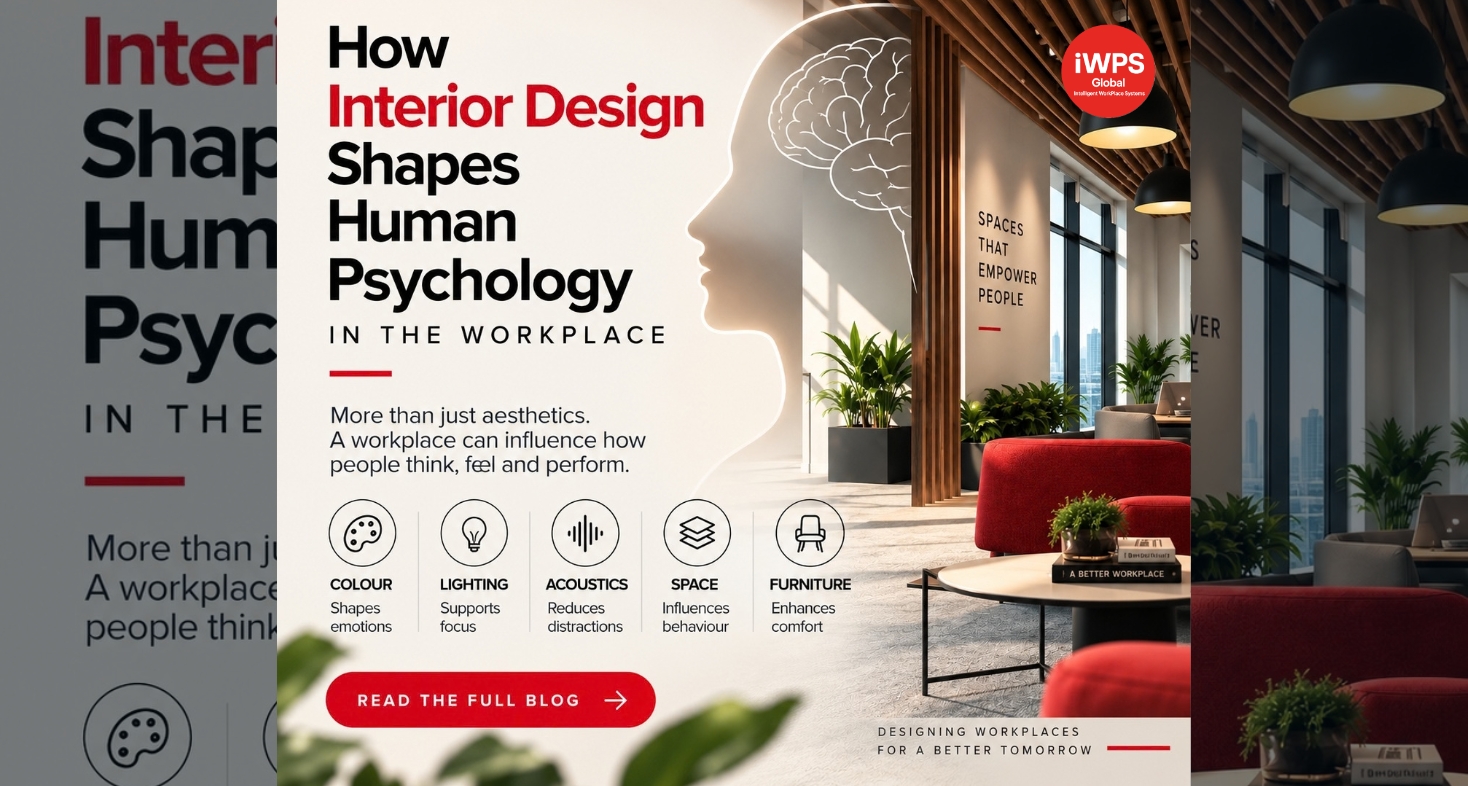
A workplace can look impressive and still feel uncomfortable.
The colors may be carefully selected. The furniture may be modern. The lighting may look good in photographs. Yet employees may still struggle to concentrate, feel distracted by noise, lack personal space or find it difficult to move through the office comfortably.
Why?
Because interior design is not experienced through the eyes alone.
People experience a workplace through light, sound, color, movement, personal space, furniture and spatial organization. Together, these elements can influence how people feel and behave inside a space.
A 2026 study published in Dunakavics, The Impact of Interior Design on Human Psychology, examines this relationship by looking at how visual and functional elements of interior environments can influence emotional states, behavior and social interaction.
For workplace designers, this raises a bigger question:
What if the office is not simply a place where work happens, but an environment that actively shapes the experience of doing that work?
Why Interior Design and Psychology Matter in the Workplace
Traditional office design often begins with practical questions.
How many employees will use the space? How many desks are required? Where should meeting rooms go? How much circulation space is needed?
These questions are necessary. However, they only describe the physical requirements of a workplace.
They do not fully describe the human experience.
A workplace also needs to support concentration, communication, privacy, movement and recovery from constant stimulation. Therefore, interior design decisions can become part of a broader workplace strategy.
The 2026 study identifies several design elements that can influence psychological responses, including color, lighting, acoustic conditions, spatial planning, furniture arrangement and decorative elements.
The Have you ever walked into an office and immediately felt that something was right—or wrong?
Sometimes the difference is not obvious. It may be the amount of natural light, the colors on the walls, the level of background noise, the distance between workstations, or simply how easy it is to move through the space.
These details are often treated as design choices. However, they can also influence how people experience a workplace.
That is where workplace interior design becomes more than an aesthetic exercise. The way an office is planned can shape comfort, movement, interaction and the way people experience their surroundings.
A 2026 study published in Dunakavics, titled The Impact of Interior Design on Human Psychology, examines how visual and functional elements such as color, lighting, materials, furniture arrangement and spatial planning can influence human behavior, emotional states and psychological comfort.
This raises an important question for modern organizations:
What if workplace interior design should be planned around how people experience the space, not simply how the space looks?
Why Workplace Interior Design Matters
Traditional office planning often begins with practical questions.
How many desks are required? How many meeting rooms are needed? Where should collaboration areas go? How much circulation space is available?
These questions are important. Nevertheless, they describe only the physical requirements of an office.
A workplace also needs to support concentration, communication, privacy, movement and social interaction. Therefore, the design of the interior can become part of a wider workplace strategy.
The research identifies several interior elements that can influence psychological responses, including color, lighting, acoustic conditions, spatial planning and furniture arrangement.
More importantly, these elements do not operate independently. People experience them together.
For example, an office may have attractive furniture and strong branding, but excessive noise can still make focused work difficult. Similarly, an open and spacious office may feel uncomfortable if lighting creates glare or workstations are arranged too closely.
As a result, effective workplace interior design requires a more connected approach.
1. Color Can Influence the Character of a Workplace
Color is one of the first elements people notice when entering a space.
The research discusses warm colors such as red, orange and yellow in relation to energy and activity, while cool colors such as blue, green and purple are associated with calmer environments.
However, workplace designers should avoid treating these relationships as universal rules.
The effect of a color can change depending on its intensity, surrounding materials, lighting conditions and the purpose of the space. Consequently, the same color may create a very different experience in a collaboration area compared with a quiet focus zone.
For example, workplace color strategy can consider:
- The purpose of each workplace zone
- Natural and artificial lighting
- Material finishes
- Brand identity
- Visual stimulation
- The type of activity taking place
The objective is not to make every office colorful. Instead, the goal is to create a visual environment that supports the purpose of each space.
2. Lighting Can Shape Comfort and Focus
Lighting does much more than illuminate a workplace.
It affects visibility, visual comfort and the way people experience an environment throughout the day. The research highlights natural light and also discusses how artificial lighting can influence activity and relaxation depending on factors such as brightness and color temperature.
For that reason, lighting should be considered as part of workplace planning rather than as a final decorative decision.
Different activities may require different lighting conditions. A meeting room, workstation area, collaboration zone and circulation path do not necessarily need identical lighting.
A thoughtful workplace lighting strategy can consider:
- Natural light availability
- Glare control
- Task requirements
- Light intensity
- Color temperature
- Screen-based work
- Time of day
- User comfort
When these factors are considered together, lighting becomes part of the overall employee experience.
3. Acoustics Can Affect Concentration and Comfort
A visually impressive office can still become difficult to work in when its acoustic environment is poorly planned.
Conversations, phone calls, equipment and movement can create constant background noise. The study identifies high noise levels and resonance as factors that can contribute to distraction and psychological discomfort.
This issue becomes particularly important in open-plan workplaces.
Open environments can support communication and collaboration. At the same time, they can expose employees to more surrounding activity.
Therefore, the question is not simply whether an office should be open or enclosed.
The better question is: what acoustic environment does each activity require?
A workplace can combine:
- Quiet focus areas
- Enclosed meeting rooms
- Collaboration zones
- Acoustic booths
- Sound-absorbing materials
- Carefully planned circulation paths
This approach allows collaboration and concentration to exist within the same workplace without forcing every activity into the same environment.
For a deeper look at this topic, explore our article on office acoustics and workplace strategy.
4. Spatial Planning Influences Movement and Interaction
People do not experience an office as a static picture.
They move through it, choose where to work, interact with colleagues and search for the right level of privacy for each task.
As a result, spatial planning can influence both movement and social interaction.
The research highlights the importance of furniture arrangement, spatial dimensions, circulation and visual organization in shaping freedom of movement, social relationships and the perception of personal space.
This means circulation is more than a technical requirement.
A well-planned workplace should make it easy for people to understand where they can:
- Focus
- Collaborate
- Meet
- Take a break
- Have private conversations
- Interact informally
When these relationships are clear, the workplace can support different behaviors without making every space look or function the same way.
5. Furniture Arrangement Can Shape Personal Space
Furniture does more than fill an office.
Its arrangement can influence movement, communication, visibility and the amount of personal space people experience.
A tightly packed layout may increase the number of workstations on paper. However, it can also reduce circulation space and make employees feel more exposed to surrounding activity.
Therefore, space efficiency should not be confused with space quality.
Effective workplace interior design considers furniture placement alongside:
- Personal space
- Circulation
- Sightlines
- Privacy
- Collaboration
- Accessibility
- Workstation orientation
- High-traffic areas
The objective is not simply to fit the maximum number of desks.
Instead, the objective is to create an environment that supports the activities taking place there.
6. Workplace Interior Design Works as a System
Color, lighting, acoustics and furniture are often discussed as separate design elements. In practice, people experience them at the same time.
Consider an office with attractive finishes and abundant natural light. If the acoustic environment is distracting, the visual design alone cannot solve the problem.
Similarly, an acoustically controlled office may still feel uncomfortable if lighting creates glare or circulation paths are poorly planned.
Therefore, workplace interior design works best when its individual elements support one another.
The research also emphasizes the combined application of color, lighting, acoustics, spatial planning and furniture arrangement rather than treating each element as an isolated intervention.
This creates a more complete approach to workplace design:
Visual environment + sensory environment + spatial environment + human behavior.
From Interior Design to Human-Centered Workplace Design
This perspective changes the question designers ask.
Instead of asking:
“How should this office look?”
the question becomes:
“How should this workplace feel and function for the people using it?”
That shift moves workplace design from aesthetics toward experience.
A focused work zone may require controlled visual stimulation, comfortable lighting and acoustic protection.
Meanwhile, a collaboration area may benefit from openness, flexible furniture and stronger visual connections.
Similarly, meeting areas may require privacy, while social spaces may encourage interaction and informal conversation.
In this way, workplace interior design can respond to the activity instead of forcing every activity into the same spatial model.
What This Means for Workplace Strategy
The psychology of interior design becomes especially relevant when organizations plan a new office or renovate an existing one.
Before finalizing a workplace design, teams can ask:
- What behaviors should this space encourage?
- Where do employees need concentration?
- Where should collaboration happen?
- Which areas require privacy?
- How much acoustic stimulation is appropriate?
- How does natural light move through the workplace?
- Does the furniture arrangement protect personal space?
- Are circulation paths intuitive?
- Are workplace zones clearly defined?
- How will employees experience the space throughout the day?
These questions connect workplace interior design with workplace strategy.
They also help organizations move beyond creating an office that simply looks modern toward creating an environment that supports how people actually work.
Measuring the Human Experience of a Workplace
Design decisions are often evaluated through drawings, budgets, timelines and space calculations.
However, the employee experience can be harder to see.
This is where workplace intelligence can add another layer.
The IWPS Global Experience Index looks beyond the physical environment and measures the broader employee experience across areas such as technology, culture, services and space.
That creates an opportunity to connect workplace design with measurable experience.
Instead of treating interior design as a one-time visual decision, organizations can think about the relationship between:
- Design
- Employee experience
- Workplace performance
- Feedback
- Continuous improvement
This approach can help workplace teams make more informed decisions as needs change over time.
The Future of Workplace Interior Design Is More Human
The role of interior design is changing.
It is no longer enough to ask whether an office is attractive, modern or aligned with the brand.
A workplace also needs to support the people who use it.
The research on interior design and human psychology highlights the importance of considering color, lighting, acoustics, spatial planning and furniture arrangement when thinking about psychological comfort and behavior.
However, there is no universal formula for creating the perfect workplace.
Every organization has different people, activities, cultures and operational requirements. Therefore, the better approach is to understand those requirements first and then design the environment around them.
Conclusion: Design the Workplace People Experience
Interior design can influence much more than the visual identity of an office.
Color can shape the visual character of a space. Lighting can influence comfort and visibility. Acoustics can affect concentration. Spatial planning can influence movement and interaction. Furniture arrangement can affect personal space and comfort.
Together, these elements contribute to the experience of working in a place.
That is why modern workplace interior design needs to be more human-centered.
The question is no longer simply:
“Does this office look good?”
Instead, organizations should ask:
“Does this environment support the people, behaviors and activities it was designed for?”
At IWPS Global, we bring together workplace strategy, spatial planning and workplace intelligence to help organizations create environments that are functional, measurable and designed around the people who use them.
Because a successful workplace is not just a space people occupy.
It is a space people experience.
Visit: https://iwpsglobal.com/ || https://blogs.iwpsglobal.com/
Explore: https://wx1.ai/
Connect with us on LinkedIn
Frequently Asked Questions
How does workplace interior design affect employees?
Workplace interior design can influence how employees experience their environment through factors such as lighting, color, acoustics, spatial planning and furniture arrangement. These elements can contribute to comfort, concentration, movement and interaction.
What interior design elements affect workplace psychology?
Key elements include color, lighting, acoustic conditions, spatial planning, furniture arrangement, materials and the organization of workplace zones. Their combined effect is important because employees experience these elements simultaneously.
Can workplace design reduce stress?
A well-planned workplace can support psychological comfort by addressing factors such as noise, lighting, personal space, circulation and visual stimulation. However, workplace stress has many causes, so interior design should not be treated as a standalone solution.
Why is lighting important in office design?
Lighting affects visibility and visual comfort. Natural light and appropriately designed artificial lighting can support different workplace activities while helping create a more comfortable environment.
How does office acoustics affect employees?
Unwanted noise and reverberation can create distraction and discomfort. Acoustic zoning, sound-absorbing materials and appropriate space planning can help create environments that better support focus and collaboration.
Does furniture layout affect employee behavior?
Yes. Furniture arrangement can influence movement, personal space, communication, visibility and interaction. Therefore, furniture planning should reflect the activities the workplace is intended to support.
What is human-centered workplace design?
Human-centered workplace design begins with the needs, behaviors and experiences of the people using a space. Instead of focusing only on floor area or aesthetics, it considers comfort, concentration, collaboration, privacy, movement and employee experience.
References
İbrahim, S. H. (2026). The Impact of Interior Design on Human Psychology. Dunakavics, 14(4), 27–34. DOI: 10.63684/dk.2026.04.03.
Read the original research article