 By Archie J Abraham
Introduction: Why Future-Proofing Workplaces Matters
The modern workplace is evolving faster than ever. Hybrid work, AI, sustainability, and employee expectations are changing how organisations design and manage their offices.
Future-proofing workplaces means creating intelligent, flexible, and people-centric environments that support productivity, wellbeing, and long-term business growth.
Smart Workplace Design Reflects Brand Identity
A workspace is more than four walls—it’s a living brand statement. Modern design weaves corporate identity into every spatial element, from material choices and lighting to functional layouts and finishes.
- Transparent corporate cultures may opt for open layouts with collaborative hubs.
- Innovation-driven organizations often showcase tech-integrated environments with futuristic aesthetics.
- Heritage brands may lean into timeless designs with premium details.
By aligning brand values with spatial design, companies create workplaces that inspire employees and impress clients. In competitive markets, this alignment becomes a key differentiator in talent acquisition, retention, and client perception.
Smart Workplace Technology Drives Innovation
In 2026, technology has become the backbone of workplace transformation. Offices deploy interconnected, intelligent systems designed to enhance productivity, safety, and efficiency.
Key innovations include:
- IoT-enabled systems: Lighting, climate, and security respond automatically to real-time occupancy and preferences.
- AI-powered analytics: Optimize energy usage, improve space planning, and guide resource allocation.
- Smart collaboration platforms: AR/VR-enabled meeting rooms, hybrid conferencing tools, and unified communication systems.
- Automated controls: Touchless access, occupancy sensors, and predictive maintenance for seamless experiences.
These innovations not only reduce costs but also create environments that are adaptive, data-driven, and employee-friendly.
Flexible Workplaces Support Hybrid Work
Hybrid is no longer a trend—it is the new normal. Flexibility has become the cornerstone of future-proof design.
Workplaces now feature:
- Reconfigurable zones: Hot desks, modular furniture, and convertible meeting rooms.
- Bookable workstations and touchless systems for safe, efficient use.
- Technology integrations that connect remote and in-office employees effortlessly.
This flexibility ensures that organisations can quickly adapt to changes in team size, function, and collaboration styles, making the office a truly agile environment.
Employee Wellbeing Drives Workplace Performance
Employee wellness is no longer optional—it’s a strategic driver of business performance. In 2026, offices are being designed to actively promote health, productivity, and retention.
Core wellness features include:
- Ergonomic furniture: Height-adjustable desks, supportive chairs, and flexible workstations.
- Wellness-focused layouts: Dedicated quiet zones, vibrant collaboration hubs, and breakout areas.
- Biophilic design: Access to natural light, greenery, and nature-inspired interiors that enhance creativity and reduce stress.
- Wellness amenities: Meditation rooms, healthy cafeterias, and fitness spaces integrated into the workplace experience.
Research confirms that health-centric design reduces absenteeism, improves job satisfaction, and drives retention—making it as much a financial imperative as a human one.
Sustainable Workplace Design
As organizations prioritize sustainability and ESG goals, eco-conscious workplaces are becoming the standard.
- Biophilic design improves cognitive performance, reduces stress, and enhances well-being.
- Sustainable materials and energy-efficient lighting and HVAC systems minimize environmental impact.
- Water-saving technologies and circular economy practices are integrated into modern projects.
- A growing number of organizations seek green building certifications to validate their commitments.
By 2026, research indicates that 67% of organisations will allocate additional budget for sustainability initiatives, recognising their role in brand credibility and long-term growth.
AI and Workplace Analytics Create Personalised Experiences
The future workplace thrives on real-time data and AI-driven personalization.
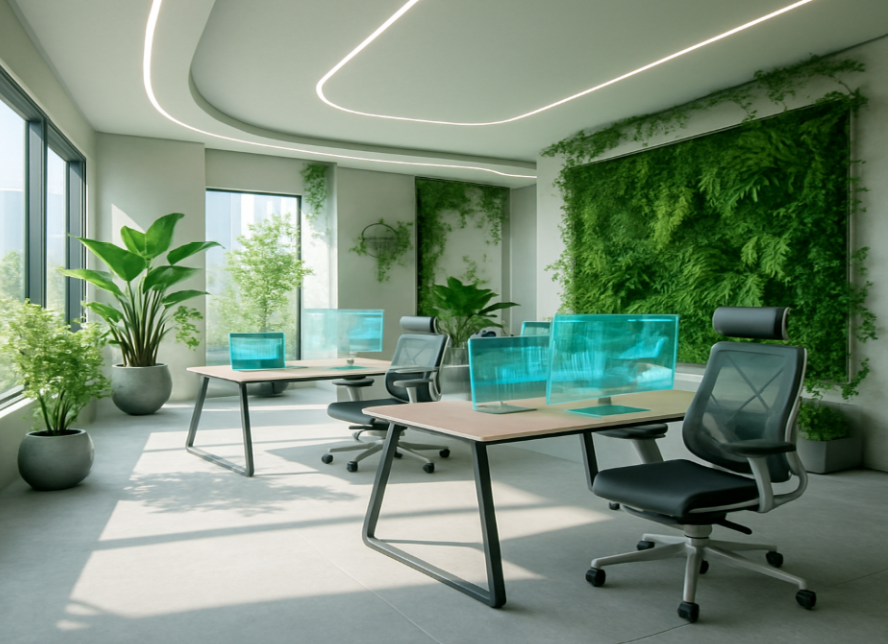
Advanced analytics track metrics such as air quality, space usage, and movement flows, helping companies continuously optimize layouts and resources. AI systems personalize environments by adjusting lighting, temperature, and workstation assignments to employee preferences—creating a more engaging and productive environment.
This ability to fine-tune experiences ensures that workplaces remain employee-centric and adaptable
Acoustic Design Improves Focus
As offices embrace open-plan layouts, noise control has become a top priority. In 2026, organisations deploy:
- Acoustic panels and partitions for sound absorption.
- Quiet pods and focus zones to support deep work.
- Zoned design that separates collaborative and focus-driven areas.
These solutions ensure a balance between collaboration and concentration, supporting diverse workstyles.
Real-World Smart Workplace Examples
The shift toward future-proof offices is not theoretical—it’s happening across industries:
- Tech and BFSI companies expanding into Tier-II and Tier-III cities demand flexible office parks with smart amenities.
- Market leaders adopting smart office technology report up to 25% productivity gains.
- Businesses leveraging automated HVAC and lighting systems achieve 40–60% energy savings, unlocking both cost and environmental benefits.
These real-world examples prove that smart design and technology integration directly translate into business outcomes.
Five Principles of Future-Proof Workplaces
The workplaces of tomorrow will be defined by five key principles:
- Intelligent – Powered by interconnected systems for automation and real-time responsiveness.
- Human-Centered – Designed around the well-being and evolving needs of people.
- Flexible – Modular and reconfigurable to adapt to new ways of working.
- Sustainable – Built with energy efficiency, certifications, and circular practices at their core.
- Brand-Aligned – A physical expression of culture, identity, and innovation.
Conclusion: The 2026 Vision
Future-proofing workplaces is no longer optional—it is essential for organisations that want to remain competitive.
By combining smart workplace design, AI, workplace analytics, hybrid work strategies, and sustainable technologies, businesses can create intelligent workplaces that support both employees and long-term growth.
At IWPS Global, we help organisations design future-ready workplaces that are flexible, sustainable, and powered by intelligent workplace solutions. https://iwpsglobal.com/
Frequently Asked Questions
What does Future-Proofing Workplaces mean?
Future-proofing workplaces means designing offices that adapt to changing technologies, employee needs, and business goals through smart workplace design and intelligent systems.
Why is smart workplace technology important?
Smart workplace technology improves productivity, supports hybrid work, reduces energy consumption, and enhances employee experience.
How does sustainable workplace design benefit businesses?
Sustainable workplace design lowers operating costs, supports ESG goals, improves employee wellbeing, and reduces environmental impact.
How does IWPS Global help Future-Proofing Workplaces?
IWPS Global combines workplace strategy, AI, workplace analytics, Digital Twin technology, and intelligent workplace systems to create future-ready offices.
This blog covers important and relevant topics that many are afraid to address Thank you for being a voice for the voiceless